
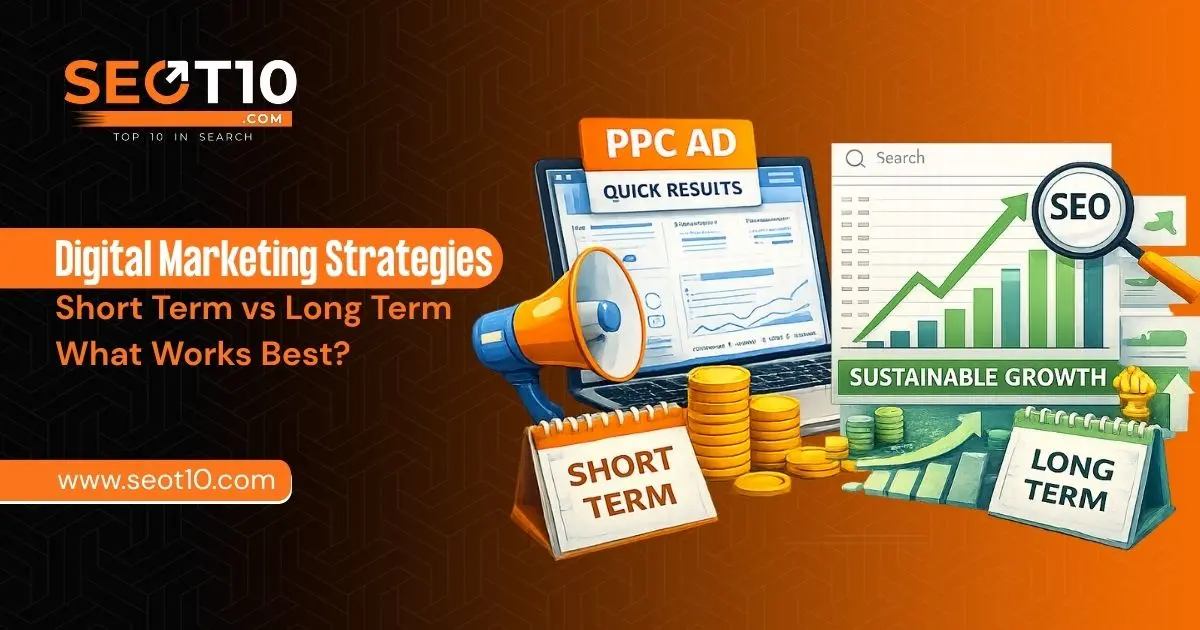
In today’s competitive online landscape, businesses often struggle with one major question:
Should we focus on short-term marketing results or build long-term digital growth?
Understanding the difference between short-term and long-term digital marketing strategies is essential for sustainable success. Both approaches play a crucial role — but knowing when and how to use them makes all the difference.
In this blog, we break down short-term vs. long-term digital marketing strategies, their benefits, differences, and how to combine them effectively.
What Are Short-Term Digital Marketing Strategies?
Short-term strategies focus on immediate results. These tactics are designed to generate quick traffic, leads, or sales.
They are perfect for:
- New product launches
- Seasonal campaigns
- Limited-time offers
- Immediate lead generation
Examples of Short-Term Digital Marketing Strategies
1. Pay-Per-Click (PPC) Advertising
Running Google Ads or social media ads helps your business appear instantly at the top of search results.
Benefits:
- Immediate visibility
- Fast lead generation
- Controlled budget
- Measurable results
2️. Social Media Ads
Platforms like Facebook and Instagram allow businesses to target specific audiences and generate leads within days.
3️. Influencer Collaborations
Partnering with influencers helps brands quickly reach new audiences.
4️. Email Promotions
Targeted email campaigns can drive quick conversions from existing customers.
Pros of Short-Term Strategies
✔ Immediate traffic
✔ Quick sales
✔ Easy performance tracking
✔ Ideal for urgent goals
Cons of Short-Term Strategies
❌ Results stop when budget stops
❌ Can become expensive
❌ High competition increases cost
Short-term strategies are powerful — but they are not sustainable alone.
What Are Long-Term Digital Marketing Strategies?
Long-term strategies focus on building authority, trust, and sustainable growth over time.
They take longer to show results but provide lasting benefits.
These include:
- Search Engine Optimization (SEO)
- Content marketing
- Brand building
- Organic social media growth
Examples of Long-Term Digital Marketing Strategies
1️. Search Engine Optimization (SEO)
SEO improves your website’s ranking on search engines organically.
Benefits:
- Consistent organic traffic
- High trust and credibility
- Long-lasting results
- Lower long-term cost
Unlike ads, SEO continues to generate traffic even without daily spending.
2️. Content Marketing
Creating valuable blog posts, guides, and educational content builds authority and attracts organic visitors.
3️. Local SEO
Optimizing your business for local searches helps attract nearby customers over time.
4️. Brand Authority Building
Publishing expert insights, case studies, and industry knowledge strengthens your brand reputation.
Pros of Long-Term Strategies
✔ Sustainable growth
✔ Higher trust
✔ Better ROI over time
✔ Strong brand positioning
Cons of Long-Term Strategies
❌ Takes time (3–6 months or more)
❌ Requires consistent effort
❌ No instant results
Short Term vs. Long Term Digital Marketing – Key Differences
| Short-Term Strategy | Long-Term Strategy |
| Immediate results | Gradual growth |
| Paid advertising focused | Organic growth focused |
| Budget dependent | Authority dependent |
| High short-term cost | Lower long-term cost |
| Good for quick leads | Good for sustainable growth |
Which Strategy Is Better?
The real answer:
The best strategy is a combination of both.
Smart businesses use:
Short-term strategies to generate immediate leads
Long-term strategies to build lasting authority
For example:
- Run Google Ads for quick traffic
- Simultaneously invest in SEO for long-term ranking
This creates a balanced marketing ecosystem.
How to Combine Short and Long-Term Digital Marketing
Here’s a practical approach:
Step 1: Start with Paid Ads
Generate leads quickly using Google Ads or social media campaigns.
Step 2: Invest in SEO & Content
Build organic rankings and authority simultaneously.
Step 3: Retarget Visitors
Use remarketing ads to convert users who visited through SEO or paid ads.
Step 4: Optimize Continuously
Analyze performance and adjust strategy regularly.
Why Businesses Need Both Strategies
Relying only on ads can drain your budget.
Relying only on SEO may delay results.
A hybrid strategy ensures:
- Steady lead flow
- Strong brand credibility
- Long-term business growth
Conclusion
Digital marketing is not about choosing between short-term and long-term strategies.
It’s about understanding how to use both effectively.
Short-term marketing brings quick wins.
Long-term marketing builds lasting success.
Businesses that balance both strategies achieve consistent growth, better ROI, and stronger market presence.
FAQs
1. How long does SEO take to show results?
SEO typically takes 3–6 months for strong improvements depending on competition and website condition.
2. Are paid ads better than SEO?
Paid ads deliver immediate results, while SEO provides sustainable long-term growth. Both work best together.
3. What is the most cost-effective digital marketing strategy?
In the long run, SEO and content marketing provide better ROI, but combining them with paid campaigns maximizes impact